Why JPY Weakens Even With Rate Hikes? No Intervention?
A stronger Japanese Yen is not the core investment thesis. The more critical question is why the Yen remains weak today and what role it can play in a portfolio going forward.
July 14, 2026
1. JPY Is Not Necessarily Weak Because Japan Is Weak. USD Is Exceptionally Strong
Many investors operate under the assumption that higher interest rates automatically lead to a stronger currency. However, currencies are driven by relative interest rate differentials.
US Treasury yields remain significantly higher than Japanese Government Bond yields.
United States 10 Years vs Japan 10 Years Bond Spread. Last Update: 30 Jun 2026. Source: World Government Bonds
As a result:
Global capital continues to flow into USD-denominated assets
USD remains strong against most major currencies
The interest rate differential continues to support a weaker JPY
In fact, most major currencies are depreciating against the USD:
Major currencies weaken against the US dollar (30 June 2026). EUR, GBP, SGD, AUD, CAD, and CHF all trending lower versus USD over the past month, with recent momentum accelerating to the downside. Source: tradingeconomics.com
2. Japan Has Not Abandoned Intervention
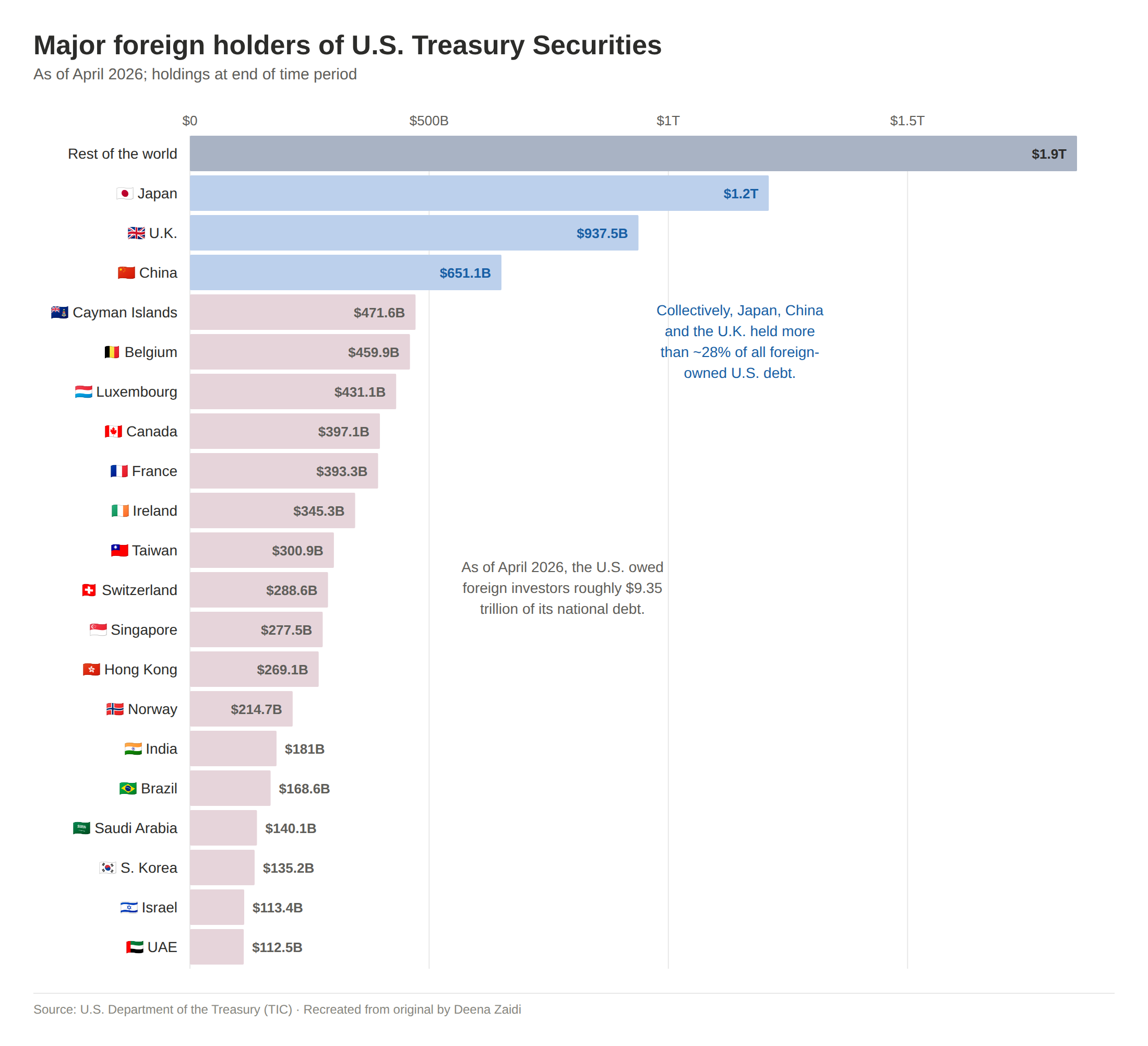
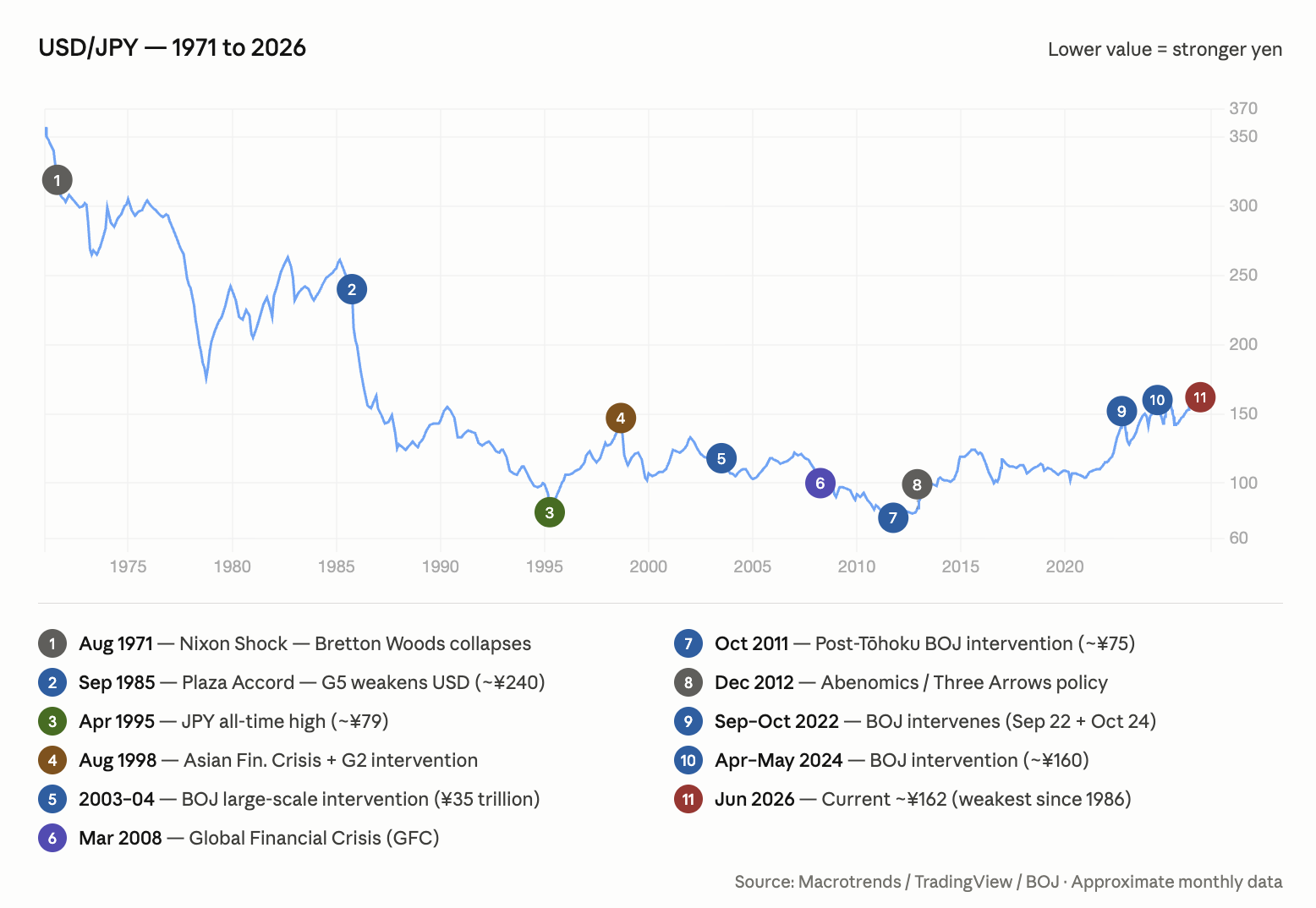
The Japanese government holds the largest stock of US Treasuries in the world, granting it greater capacity to intervene in exchange rates than many other nations. Many market participants view the 160–162 USD/JPY range as an area where intervention risk increases.
Japan holds a substantial amount of US Treasury bonds and can sell these assets to obtain US dollars when necessary, using the proceeds to support the exchange rate.
Major foreign holders of US Treasury Securities, (Latest update: April 2026): Japan ~$1.2T versus the UK ~$937.5B. Source: US Department of the Treasury
3. Not "JPY will strengthen tomorrow."
The better narrative is that the JPY can act as a hedge against the next gloal financial crisis.
For decades, JPY has been one of the world's primary funding currencies. Investors borrow JPY at low interest rates and invest in higher-yielding assets globally through carry trades.
During periods of financial stress:
Investors reduce risk
Investors sell overseas assets
Investors repay JPY borrowings
This creates demand for JPY and has historically supported sharp appreciation during major risk-off events.
4. What If Interest Rates Rise: Rising Interest Rates May Create Better Investment Opportunities
Higher interest rates often create short-term pressure on property prices and investor sentiment. For long-term owners, however, this environment can present opportunities to negotiate better prices and acquire quality assets at more attractive valuations.
Our investment thesis is not built on low interest rates alone. It is built on resilient rental demand, sustainable cash flow, and disciplined financing. Rather than trying to time interest rate cycles, we focus on acquiring assets that can continue performing across different market environments.
Tokyo's 23 wards by survey area (Map 1), with three demand indicators: mid-market rents rising steadily since 2016 (Figure 1), positive net migration since 2022 (Figure 4), and J-REIT residential occupancy holding in a tight 96–98% band for a decade (Figure 5) — evidence of demand and cash flow that hold up across market cycles, including rising-rate periods. Source: Savills Research & Consultancy; Tokyo Metropolitan Government. Q1/2026 occupancy as of February 2026.
5. Why Invest If JPY Remains Weak?
We are not investing in Japan because we predict the Yen will strengthen tomorrow.
We invest because:
Weak JPY provides an attractive entry point
Tokyo residential real estate generates stable recurring cash flow
JPY financing costs remain among the lowest in the developed world
If a future financial crisis occurs, JPY has historically tended to strengthen due to carry trade unwinding
.png)

.png)
.png)

-min.jpg)