Possible US Rate Cuts? Warsh Is Changing the Ruler
Under a new chairman, the Fed is rethinking how inflation and unemployment are measured, and what that means for the rate path.
September 17, 2026
The inflation question
Warsh has said inflation is "a choice," and the same may prove true of how it is measured.
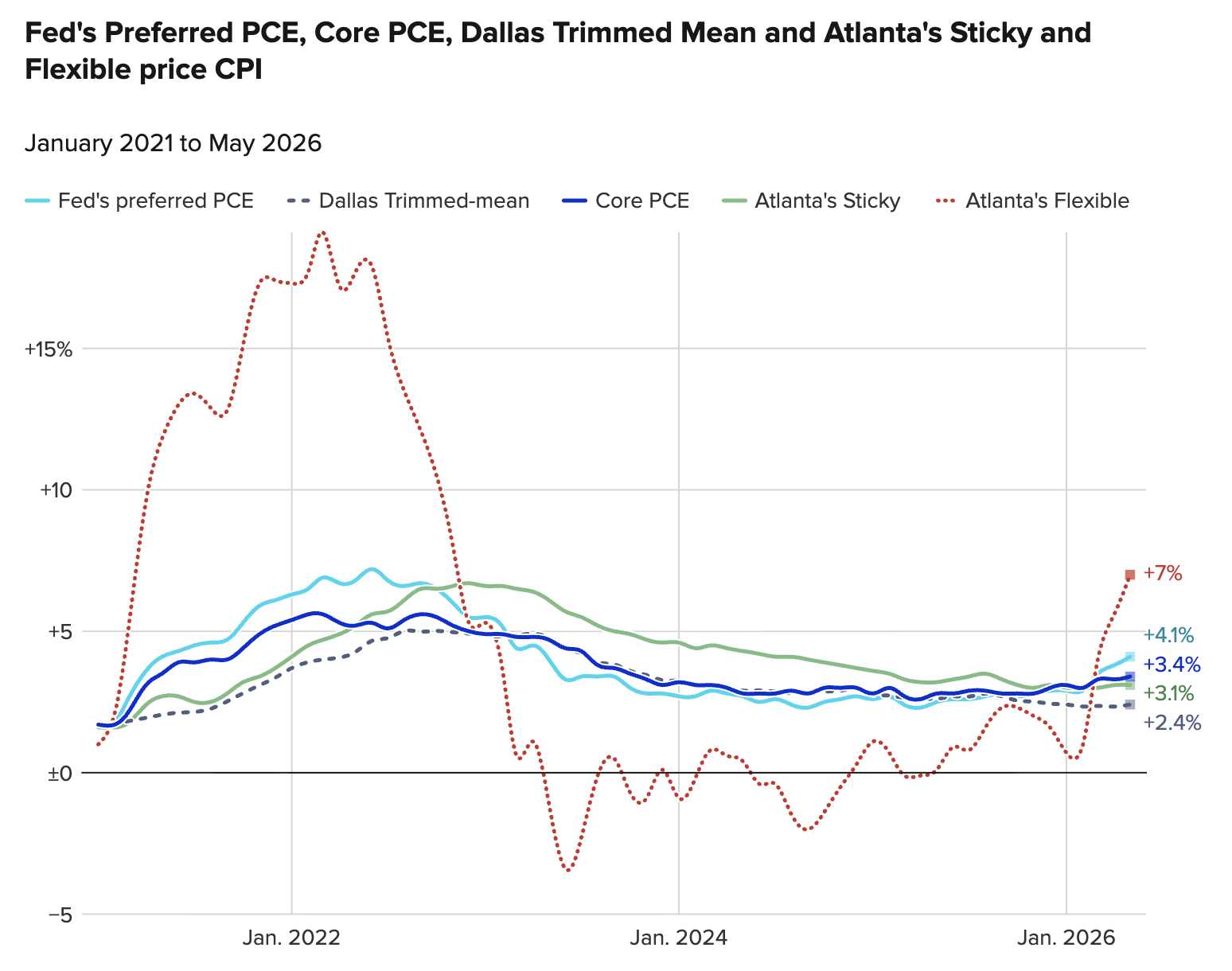
What the main measures say (May 2026)
CPI — what consumers pay for goods and services: 4.2% headline, 2.9% core
PCE — the Fed's preferred gauge, which adjusts more aggressively for consumers trading down to cheaper substitutes: 4.1% headline, 3.4% core
Economists generally favour core as the better long-run read, since it strips out the most volatile categories. That matters now, given the Iran war's effect on energy prices.
What the alternative measures say
Chart: Deena Zaidi (CBNC)Source: U.S. Bureau of Economic Analysis; Federal Reserve Bank of Dallas, Federal Reserve Bank of Atlanta
Dallas Fed trimmed mean — throws out the 24% of items with the smallest price changes and the 31% with the largest: 2.4%. Caveat: Dallas Fed President Lorie Logan has warned the methodology as deployed may be discarding the wrong prices.
That is a spread from 1.75% to 7%, depending on which ruler is used.
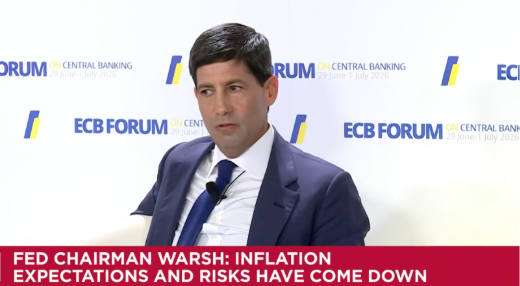
Warsh's stated ambition is to change the inputs rather than the target, telling the ECB Forum in Sintra on 1 July that he hopes the Fed will be using new technologies within nine to twelve months to read the real economy in real time.
“My hope, my aspiration, is that nine-12 months from now we’re going to be using new technologies to understand what’s happening in the real economy in a contemporaneous, real-time way that positions us as central bankers to make better decisions.” Warsh said during a discussion at the European Central Bank Forum on Monetary Policy in Sintra, Portugal. (July 1, 2026)
The jobs question
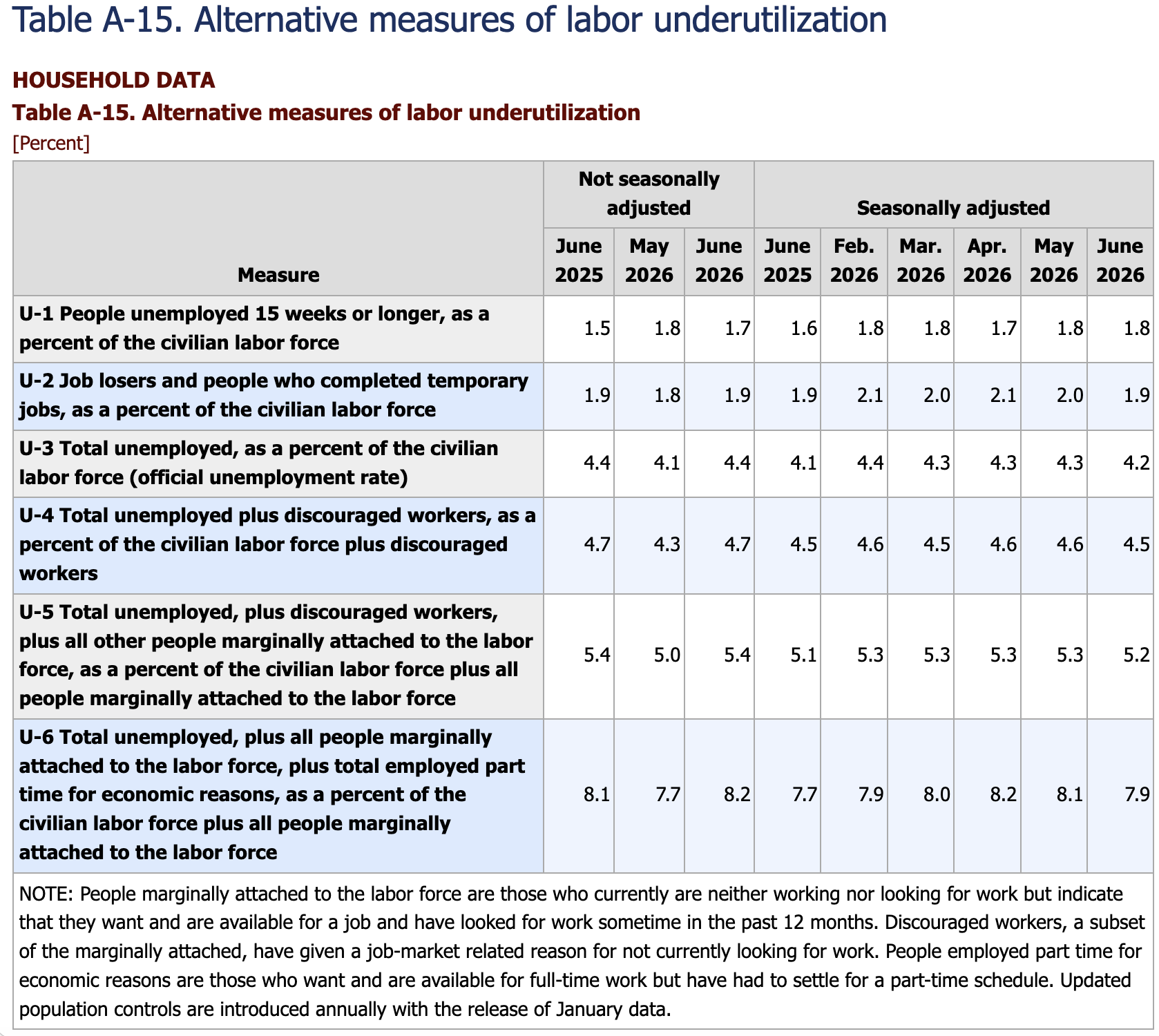
The headline unemployment rate is one of six measures the BLS publishes.
Source: Employment Situation on US Bureau of Labor Statistics (July 02, 2026)
The Fed relies on U-3 when it reports on labor market conditions and sets rates. The measure counts only those actively searching for work, so anyone who gives up looking leaves the labor force and stops being counted as unemployed, which allows the rate to fall even as fewer people are working.
June 2026 showed the effect clearly: participation dropped 0.3 points to 61.5%, holding the headline rate at an apparently stable 4.2%, the number reads as an improvement.
However, employers were telling a different story.
According to Yahoo Tech's 2026 layoff tracker published on 17 July, 2026, employers were telling a different story. TrueUp counts more than 165,000 tech layoffs so far this year, against 245,000 across the whole of 2025, and the pace picked up in the two months the unemployment rate held steady and then fell.
May 2026
Meta — 8,000 roles, or 10% of its workforce, plus 6,000 open positions closed
PayPal — nearly 4,800 over the next few years
Cisco — just under 4,000
Intuit — 3,000, or about 17% of its workforce
Cloudflare — more than 1,100
Wix — around 1,000, or 20% of staff
LinkedIn — 875, or 5% of staff
Coinbase — 700, or 14% of staff
Groupon — 400, or 25% of its workforce
Nearly all cited AI adoption directly.
June 2026 — roughly 14,000 cuts
Lucid — 18% of its workforce
Rackspace — 750, or 15% of staff
Robinhood — around 290, or 10% of staff
Rivian — several hundred, around 2% of staff
Bungie and Salesforce — numbers not disclosed
Oracle — annual disclosure filed 23 June showed 21,000 roles gone over the past year, roughly 13% of headcount, the company stating that AI adoption across its operations had resulted in workforce reductions and might continue to do so
Layoffs mounted through May and June, but the official unemployment rate went the other way, holding at 4.3% before falling to 4.2%, which reads as fewer people out of work when in fact 507,000 fewer people were employed.
What to watch
Warsh has been hawkish in public, and markets have at points priced a hike rather than a cut this year. The thing to watch is not the rate decision but the inputs: whether trimmed mean displaces core PCE as the reference measure, and whether the Data task force changes what the Fed reads before it changes what it does. A target reached by changing the measure is not the same as a target reached by changing prices.
.jpeg)
-min.jpg)