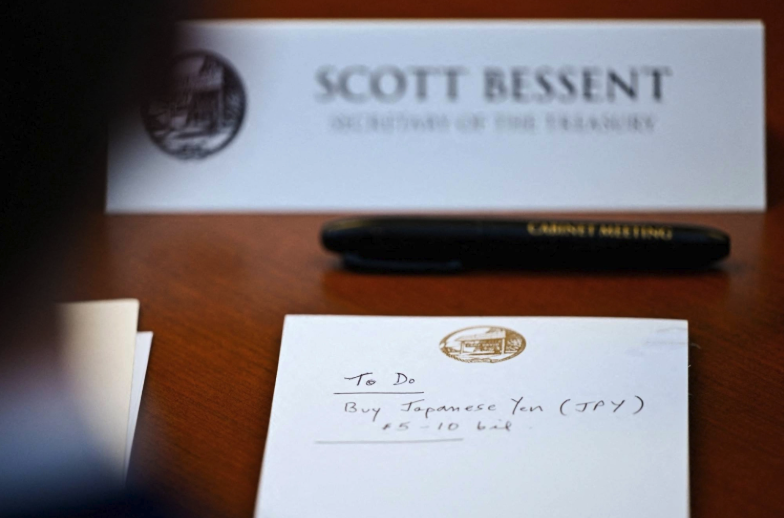
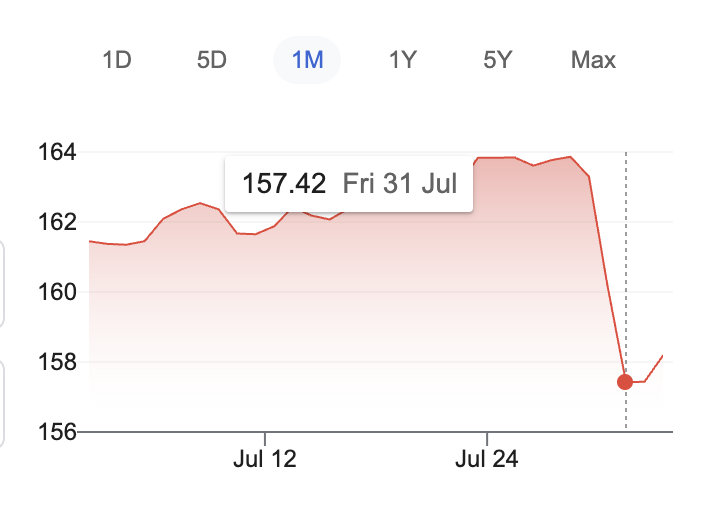
Just days after plunging past 163 per dollar, a grueling four-decade low, the yen staged a dramatic reversal, pulling back to 157.42 by the close of New York trading on Friday. The sudden cooling of the dollar’s rally brought the yen to its firmest level since early May, driven by direct intervention, aligned messaging from Washington and Tokyo, and mounting evidence that the US was actively stepping in to support Japan’s currency.
A weaker yen carries consequences well beyond Japan, giving Washington clear incentives to act:
“Without backing from rate differentials, the impact of FX interventions is likely to be relatively short-lived,” Evercore ISI strategists Marco Casiraghi and Gang Lyu wrote Friday. “While flagging the exchange rate as a source of risk to inflation, the BOJ has so far refused to get pulled into a more active role in supporting the yen.”
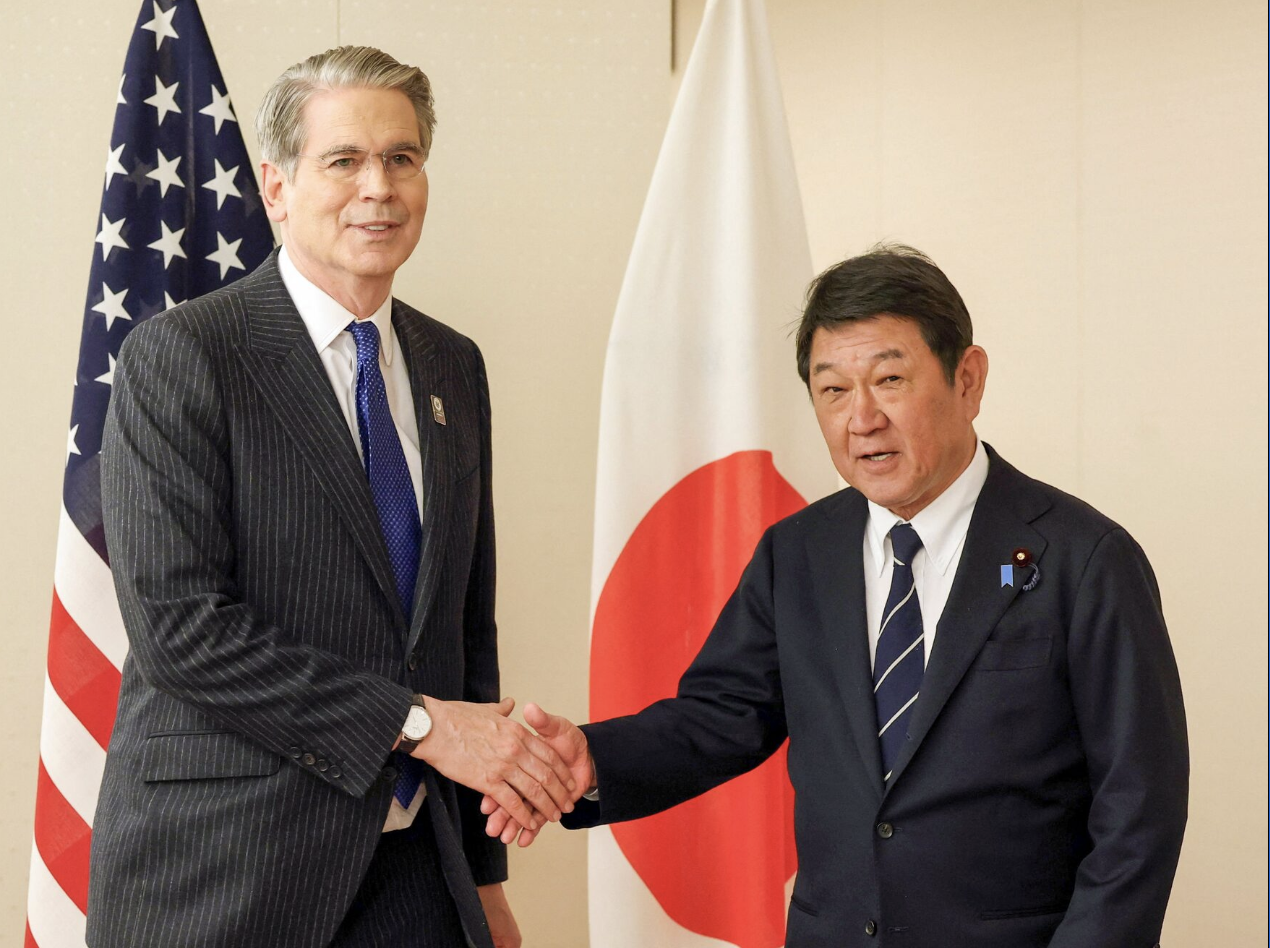
US Treasury Secretary Scott Bessent has assumed an unusually prominent role in the effort. The former hedge fund manager and veteran Japan market watcher raised eyebrows after telling Fox Business that the yen was "very undervalued" and that excess currency volatility was inherently damaging.
The Finance Ministry’s top currency bureaucrat, Atsushi Mimura, said on Friday that Japan is getting more than “moral support” from Washington.
Meanwhile, Katayama, gave a call-out to Bessent, describing him as “one of the most knowledgeable experts in markets.”
“Bessent’s influence is significant,” said Nobuyasu Atago, chief economist at Rakuten Securities Economic Research Institute and a former BOJ official. “The US is now becoming more cooperative with Japan’s interventions.”
During New York trading on Friday, Japanese authorities executed heavy dollar-selling interventions. Simultaneously, the New York Fed stepped into the market to sell euros and buy yen for the US Treasury, Washington's first active currency intervention in over a decade. Pre-session reports indicated the Treasury had signaled several major banks to prepare for action, while the New York Fed conducted rate checks on yen-euro pairs with key dealers.
The impact was immediate. The yen jumped more than 1% against both the dollar and the euro on Friday, building on a 3% rally against the dollar the previous session. Estimates suggest Japan spent roughly ¥8.45 trillion ($52.8 billion) on Thursday alone, potentially marking its largest single-day intervention on record.
Market participants noted that the unprecedented level of US-Japan cooperation fundamentally alters trader dynamics. While previous solo interventions by Japan faded within weeks, visible US backing significantly raises the penalty for shorting the yen.
“The market had underestimated the authorities,” said Michiyoshi Kato, a senior adviser in the currency and rates client team at Sumitomo Mitsui Trust Bank in Tokyo. “It has likely become more difficult for speculators to sell the yen. If there is another intervention, the dollar-yen exchange rate will likely fall below 155 yen.”
Despite the joint effort, fundamental headwinds persist. The yen remains bogged down by elevated energy import costs, persistent fiscal deficits, and a massive interest rate gap between Tokyo and Washington.
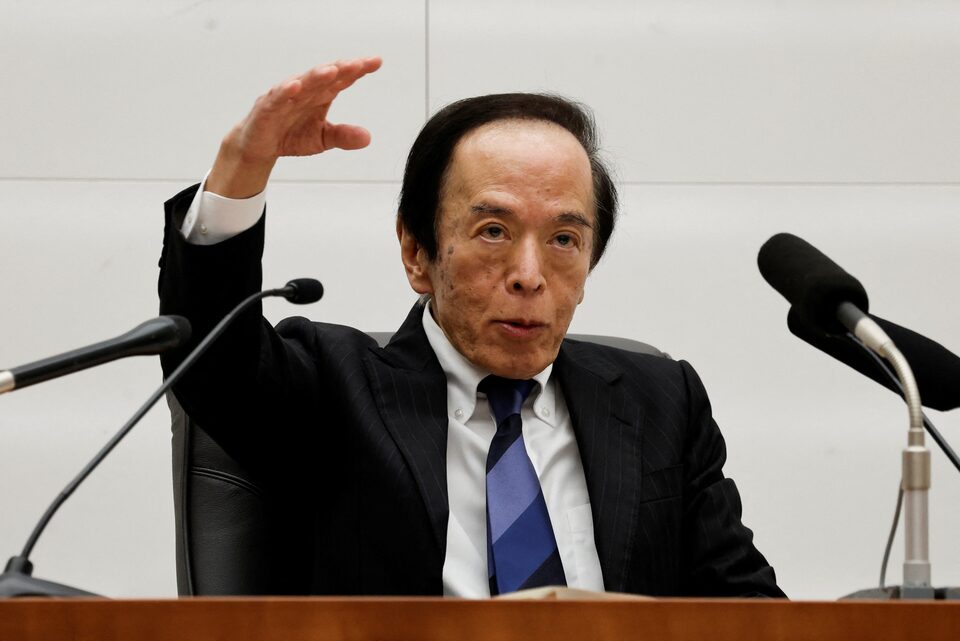
While the Bank of Japan held rates steady at 1.0% in its latest 8-1 vote, its highest level since 1995 and t remains vastly lower than the Fed's target range of 3.50%–3.75%. In his post-meeting briefing, Governor Kazuo Ueda kept the door open to future tightening but declined to signal an imminent hike, leaving the currency with limited fundamental support.
Sources
-min.jpg)